
What is a Cataract?
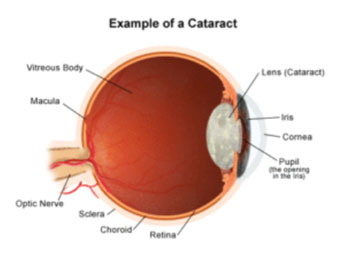
A cataract is a clouding of the eye’s naturally clear lens. When the lens becomes cloudy. Light rays cannot pass through it easily and vision becomes blurred.
What causes cataracts?
Cataract development is a normal process of aging. Cataract can also be present at birth, develop from injuries, certain diseases, medication or long-term exposure to sunlight.
How is a cataract treated?
A cataract may need to be treated if your vision is only slightly blurry simply changing your eyeglass prescription may help improve your vision for a while. There are no medication’s, eyedrops, exercises or glasses that will cause cataracts to disappear or prevent them from forming. Surgery is the only way to remove a cataract when you are no longer able to see well enough to do the things you like to do. Cataract surgery involves removing the cataract and placing it with an artificial lens.
What are the symptoms of cataracts?
- Cloudy or blurry vision
- Colors seem to fade
- Frequent prescription changes in your eyeglasses or contact lenses
- Glare
- A halo may appear around lights
- Double vision or multiple images in one eye
- Poor night vision
- Headlights, lamps, or sunlight may appear too bright
The risks of cataract surgery
Though they rarely occur possible complications of cataract surgery are:
- infection
- bleeding
- swelling of the retina
- swelling of the cornea
- detachment of the retina
- dislocation of the lens
Preparing for your Cataract Surgery
- If you are claustrophobic, please tell your surgeon before the day of surgery
- If you take blood thinners (for example, Aspirin Plavix, Warfarin) check with your surgeon to be advised if there is a need to stop them before surgery. Do NOT stop this medication without your surgeons advice
- If you have ever taken a drug Flomax (Tamsulosin), please inform your surgeon
- Have a role of 1 inch medical silk paper, tape for reattaching the eye shield that you will wear after your cataract surgery.
- You will need to arrange for a possible adult to take you home from surgery and stay with you until the next day.
How to put in your eyedrops
- Wash your hands
- Shake the bottle of the eyedrops
- Remove the cap of the bottle
- Sit with your head, tilted back or lie down
- Open both eyes and look up with one finger, draw the lower lid of your operated eye down to form a “cup”
- With the medication in the other hand, hold it as near as possible to the eyelid without touching the eyelid and squeeze the eyedrop into the cup made with the lower lid is pull down
- Do not touch the eye or eyelid with the bottle
- Close the eye gently for one (1) full minute. With a tissue, gently remove excess liquid from the eye lash/cheek
- Wait five (5) minutes before putting in a different type of eye drop
Notification of your surgery date and time
The PEI Vision Surgical Centre will call you with your date and time of surgery. If you do not know your time, please call the PEI vision surgical centre @
During your surgery, tell your surgeon immediately:
- If you need to cough or sneeze
- If you are uncomfortable
Day of your surgery
- Shower or bath the evening before or the morning of your surgery you must remove all your face makeup
- Wear comfortable clothes that do not need to be pulled over your head. This will make it easier to get dressed for home.
- Leave all jewelry and valuables at home
- Take your regular prescription medication the morning of your surgery. Eat your breakfast and take your insulin or diabetic medication in the morning of your surgery.
- Bring all of your medication with you to the PEI Vision Surgical Center.
- Before your surgery, you will be given eyedrops and you may also be given medication to help you relax.
Your cataract surgery
The surgery usually lasts for less than one hour. You will receive numbing medication to numb your eye so you will not feel pain during the surgery.
The nurses and doctors will explain what they are doing. The surgeon uses a microscope to make a tiny incision in the eye. Your cloudy eye lens is removed, and the new lens is inserted. You will hear a machine talking and making different sounds and noises. You may see light movement, but you will not be able to see the surgery while it is happening.
There are only certain times during the procedure when your surgeon can safely allow you to move. Therefore, is crucial for you to remain still unless you have your surgeons permission to move.
Following Your Surgery
Eye Care
- Plan to spend a quiet day at home following your surgery
- No driving for 48 hours unless otherwise instructed
- You will wear a shield over your eye until the morning after your surgery and then for one week while you are sleeping
- Following your surgery will be given a schedule of when to use your prescription eyedrop you can remove your eye shield to put in the eyedrop’s
- Resume glaucoma drops the day of your surgery
- You may wear your glasses the day of surgery
- You will be instructed by the nursing staff regarding your follow up appointment with your surgeon.
What To Expect
- You may feel scratchy, and you may have a burning sensation when putting in your eyedrop
- Your vision may be blurry for the first few days after surgery
- Mild discomfort is normal and may be relieved by taking Tylenol or Advil
Following surgery, you can:
- Climb stairs, one step at a time until your eyesight improves
- Have your hair washed by another person for two weeks. Keep your head back such as in a beauty salon or barber shop to avoid getting water in your eyes.
- Take a bath, as long as you avoid getting soap or water in your eyes
- Watch TV or read at your own comfort. A feeling of eye strain or pressure in the eye is a warning to stop any activity.
- Shave
To avoid injury to your eye you must NOT:
- Touch or apply pressure especially to your upper lid of your operative eye for two (2) weeks following your surgery
- Allow soap or water in your eye. You can gently wash around your eye for two (2) weeks
- Lift anything over 25 pounds for two weeks
- Swim for at least four (4) weeks
- Operate machinery or participate in sports until given permission from your surgeon
Call your eye surgeon right away or go immediately to the nearest emergency department if you have:
- Severe pain, especially associated with nausea and vomiting
- Increase swelling, bruising, redness, or unusual discharge of the operative eye
- Sudden flashes of light in the eye
- Significant decrease in vision
- A shadow is still a dark curtain has been drawn across your eye